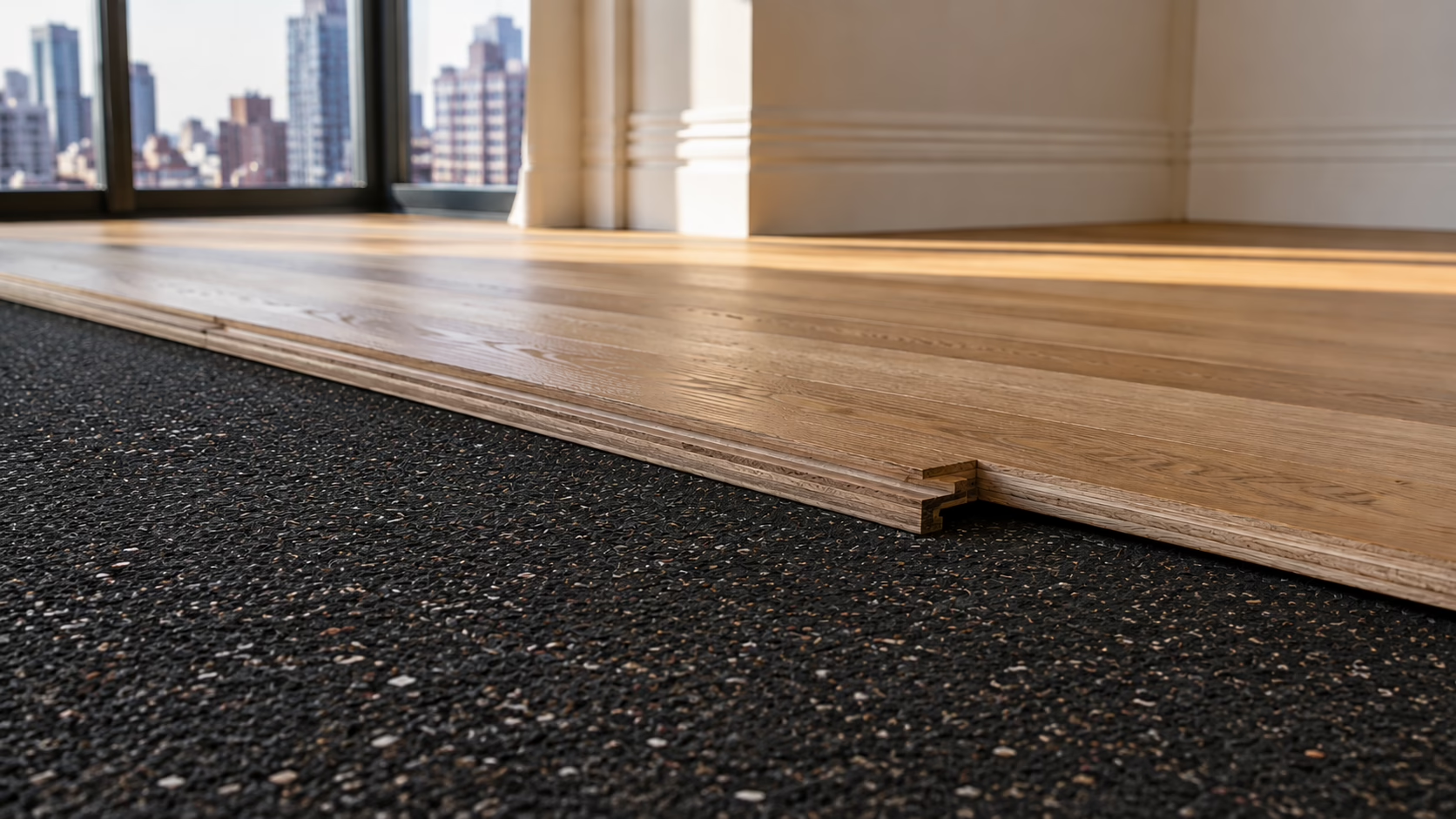
In New York City, peace and quiet is the ultimate luxury. Whether you live in a pre-war co-op on the Upper West Side or a modern condo in Brooklyn, noise transmission between floors is the number one cause of neighbor disputes.
Because of this, NYC buildings have instituted rigid soundproofing rules that you must follow during any renovation. If you are planning to rip out old floors to install wide-plank European oak, custom chevron parquet, or natural stone, understanding building acoustics and acoustic underlayment requirements is absolutely non-negotiable.
Quick Summary: What You Need to Know
If you are replacing the floors in your NYC apartment, here is what your board will demand before approving your project.
Key Requirements for NYC Flooring Renovations:
- Acoustic Underlayment: You cannot install hard flooring directly over a subfloor. An approved sound-dampening membrane is legally required.
- STC & IIC Ratings: Your materials must meet strict acoustic ratings (typically a score of 50 to 55+).
- Architectural Proof: You must submit product specification sheets and architectural drawings to the board’s reviewing architect.
The Risk of Doing It Wrong:
- If your neighbor complains about noise after you move in, and you bypassed the building’s soundproofing rules, the co-op board has the legal right to force you to rip up your brand-new floors to install the proper underlayment at your own expense.
Planning a Flooring Upgrade or Full Gut Renovation?
Replacing floors in NYC is never just a cosmetic update-it is a highly regulated compliance issue. Mistakes here can cost you tens of thousands of dollars in ripped-up materials and legal disputes with your board.
At DNB Renovations, we manage the entire flooring and soundproofing process:
– Acoustic material sourcing and STC/IIC compliance
– Co-op board and Alteration Agreement approvals
– Custom luxury flooring design
– High-end, flawless installation
The Reality of NYC Co-op Flooring Rules
When you submit an Alteration Agreement to renovate your apartment, the board’s reviewing architect will heavily scrutinize your flooring plan. Their primary goal is to protect the residents below you from impact noise (footsteps, dropped items) and airborne noise (music, voices).
The Infamous “80% Carpet Rule”
For decades, the standard defense against noise in NYC co-ops has been the “80% carpet rule.” This building policy dictates that 80% of the floor area in dry living spaces (bedrooms, living rooms, hallways) must be covered with area rugs or wall-to-wall carpeting.
For homeowners investing in high-end custom wood flooring, covering it up with rugs defeats the entire purpose of the design.
The Solution: Many modern luxury boards will grant waivers to the carpet rule-but only if your architectural plans prove that your new flooring system incorporates state-of-the-art acoustic soundproofing that exceeds the building’s minimum requirements.
Decoding STC and IIC Ratings
Your board will not just take your word that your new floors are quiet. They will demand to see the exact ratings of your underlayment. They evaluate two specific metrics:
1. Impact Insulation Class (IIC)
This measures a floor assembly’s ability to block impact noise (footsteps, moving furniture, high heels). This is the most critical metric for hard surface flooring. The higher the IIC number, the better the sound attenuation.
2. Sound Transmission Class (STC)
This measures the ability to block airborne noise (voices, televisions, dogs barking).
What Numbers Do You Need? Most luxury buildings in Manhattan and Brooklyn require underlayments that achieve an IIC and STC rating of at least 50 to 55. However, ultra-strict co-ops often demand premium ratings of 60 or higher.
Approved Soundproofing Materials for NYC Renovations
Achieving a high IIC rating requires more than just laying down a cheap foam pad from a big-box store. For high-end residential applications, DNB Renovations installs multi-layered subfloor systems:
- Acoustic Rubber Underlayments: Heavy, dense recycled rubber mats (typically 1/4″ to 1/2″ thick) are the gold standard for blocking impact noise under hardwood floors.
- Cork Underlayment: A natural, sustainable option that provides excellent acoustic properties, provided it is properly tested to meet the building’s required IIC ratings.
- Decoupling Systems & Acoustic Sealants: When installing heavy tile or stone during a [NYC Bathroom Renovation], we use specialized uncoupling membranes. We also use acoustic sealants around the perimeter of the room to prevent vibrations from traveling laterally into the walls and down into the building’s structure.
Why the Design-Build Approach Protects Your Investment
When you hire a cheap contractor who doesn’t understand NYC acoustics, they will often skip the expensive underlayment to lower their bid. When the board finds out, you foot the bill for the tear-out.
The DNB Solution: As a premium Design-Build firm specializing in [Full Gut Renovations], we integrate acoustic engineering directly into your architectural plans.
- We submit the exact STC/IIC cut sheets the board demands.
- We ensure the underlayment thickness aligns seamlessly with your doors, transitions, and custom millwork.
- We install it flawlessly, ensuring you pass your post-construction inspections and keep your neighbors happy.
Secure Your Peace of Mind
Do not risk your luxury renovation on non-compliant materials. Replacing floors in NYC is a high-stakes process that requires expert planning, board approval, and flawless execution.
Work with a team that understands NYC acoustics, strict co-op boards, and premium construction.
Contact DNB Renovations today to schedule your consultation and start your project the right way.