A successful renovation should make a home more beautiful, more functional, and more comfortable to live in. But in New York City apartments, homeowners are increasingly thinking about another layer of quality: how the renovation affects indoor air, dust, moisture, materials, and daily livability.
Healthy renovation is not a separate style. It is a planning approach. It considers how the work is contained, how dust is managed, which materials are selected, how ventilation is handled, and how the finished home will perform over time.
For NYC apartments, co-ops, condos, townhouses, and full home renovations, this matters because construction often happens in dense buildings with shared hallways, older systems, limited ventilation, and strict building rules.
Quick Answer
A healthier renovation in NYC should include strong site containment, floor and hallway protection, dust control, HEPA-based cleanup practices where appropriate, low-VOC material selections, proper bathroom and kitchen ventilation, moisture management, and careful planning around older building conditions.
The goal is not only to keep the jobsite cleaner during construction. It is to create a finished home that feels comfortable, durable, and easier to maintain.
Table of contents
- Quick Answer
- What Healthy Renovation Really Means
- Dust Control and Site Containment
- HEPA Cleanup and Cleaner Work Practices
- Low-VOC Paints, Adhesives, and Finishes
- Ventilation, Moisture, and Bathroom Planning
- Older Building Conditions in NYC Apartments
- Healthy Choices for Kitchens and Full-Home Remodels
- Renovating While Living at Home
- How DNB Renovations Plans Cleaner Projects
- Final Thoughts
What Healthy Renovation Really Means
Healthy renovation does not mean turning every project into a laboratory. It means making practical decisions that reduce avoidable mess, moisture risk, and material-related discomfort.
In a NYC renovation, that can include:
– Containing active work areas
– Protecting floors, doors, and shared spaces
– Reducing dust migration
– Using appropriate cleanup tools
– Choosing low-odor or low-VOC products when possible
– Planning ventilation early
– Managing moisture in bathrooms and kitchens
– Addressing older building conditions carefully
– Coordinating noisy or dusty work with building rules
– Keeping communication clear with homeowners and management
DNB’s home renovation in NYC guide explains that city renovations are shaped by approvals, logistics, material lead times, limited staging space, and site protection. Healthy renovation builds on that same idea: good outcomes begin before demolition.
Dust Control and Site Containment
Construction creates dust. Demolition, sanding, cutting, drilling, tile removal, plaster repair, cabinetry work, and flooring prep can all release fine particles into the work area.
The goal is not to pretend dust will not happen. The goal is to manage where it goes.
Dust control may include:
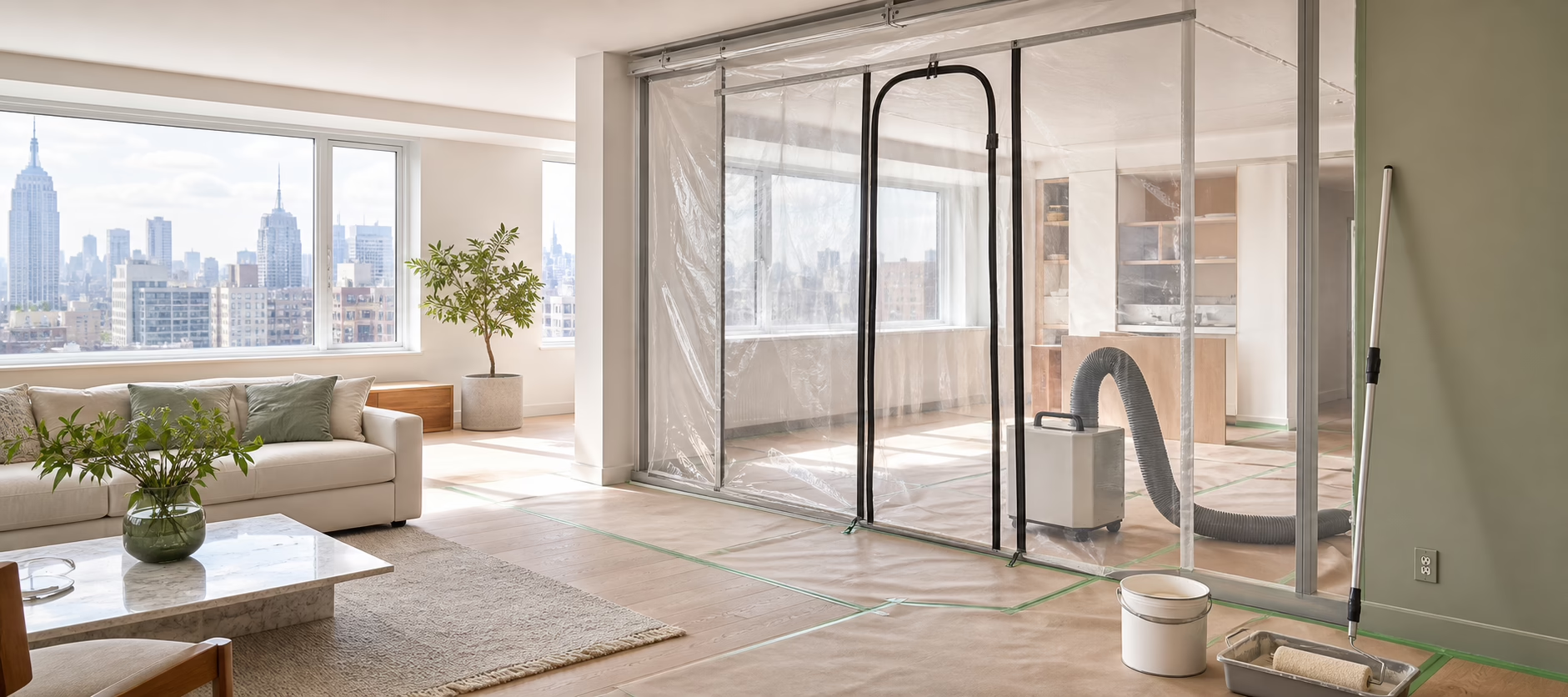
– Plastic containment around active work areas
– Zip walls or temporary barriers
– Covered walk paths
– Floor protection
– Doorway sealing
– Protection for elevators and hallways
– Daily cleanup routines
– Controlled debris removal
– Organized staging
In apartments, containment is especially important because dust can move into bedrooms, closets, HVAC pathways, hallways, and neighboring spaces if the site is not prepared properly.
For occupied renovations, containment should be planned around how the homeowner will live during the work. If the kitchen is under construction, where will daily items be stored? If one bathroom is being renovated, how will access to the rest of the home be protected? If floors are being refinished, should the homeowner relocate temporarily?
These questions are part of practical renovation planning.
HEPA Cleanup and Cleaner Work Practices
HEPA-filtered equipment can help reduce fine dust during cleanup, especially when used as part of a broader containment plan. It is not a substitute for good site preparation, but it can support cleaner work practices.
A cleaner renovation process may include:
– Using appropriate vacuums during dust-producing work
– Cleaning at the end of each workday
– Keeping debris contained
– Removing waste through approved paths
– Protecting air pathways when possible
– Avoiding unnecessary cutting inside finished areas
– Keeping materials organized
Cleanliness also affects workmanship. A disorganized jobsite can slow trades, increase accidental damage, and make it harder to see details during installation.
DNB’s renovation process includes project preparation, protection of surrounding areas, demolition, construction coordination, and final walkthrough. Those steps matter because a cleaner project is usually a better managed project.
Low-VOC Paints, Adhesives, and Finishes
VOCs, or volatile organic compounds, can be released by some paints, stains, adhesives, sealers, caulks, flooring products, cabinetry materials, and finishes. Homeowners who are sensitive to odors or planning a renovation while living at home often ask about low-VOC options.
Low-VOC selections may include:
– Low-VOC paint
– Water-based finishes
– Low-odor adhesives
– Carefully selected sealants
– Greener flooring products
– Cabinetry and millwork materials with better emissions profiles
– Ventilation planning during and after installation
Low-VOC does not automatically mean every product is right for every use. Bathrooms, kitchens, floors, and high-wear areas still require durability. The goal is to balance indoor comfort with long-term performance.
DNB’s interior design services can help homeowners compare material options in a way that considers appearance, durability, maintenance, budget, lead time, and installation requirements.
Ventilation, Moisture, and Bathroom Planning
Bathrooms are one of the most important rooms to plan from a healthy-home perspective. Moisture that is not controlled can lead to peeling paint, finish deterioration, musty odors, and long-term maintenance issues.
A strong bathroom renovation should consider:
– Exhaust ventilation
– Waterproofing
– Drainage
– Shower system planning
– Tile installation quality
– Grout and sealant maintenance
– Vanity material selection
– Lighting and electrical safety
– Access for future service
DNB’s bathroom renovation checklist explains why ventilation, waterproofing, plumbing, and electrical planning should be reviewed before the visible finishes are installed.
If the project involves moving a bathroom, expanding a wet area, or changing plumbing locations, homeowners should also review DNB’s guide to NYC wet-over-dry rules. In co-ops and condos, healthy bathroom planning also has to respect building rules and the units above and below.
Older Building Conditions in NYC Apartments
Older NYC apartments can be beautiful, but they may also contain conditions that require careful evaluation before renovation.
Potential issues may include:
– Old plaster
– Aging plumbing
– Outdated wiring
– Previous repairs
– Uneven floors
– Moisture damage
– Poor ventilation
– Acoustic transfer
– Materials that require specialized handling
Homeowners should not guess about hidden conditions. If a renovation involves older materials, suspicious surfaces, or unknown building history, qualified professionals should evaluate the proper approach before disturbance.
DNB’s guide to renovating a pre-war apartment in NYC explains how charming older homes often require deeper planning behind the walls. That planning supports both construction quality and long-term comfort.
Healthy Choices for Kitchens and Full-Home Remodels
Kitchens also affect indoor comfort. Cooking ventilation, durable surfaces, easy-to-clean materials, lighting, storage, appliance placement, and moisture-resistant details all contribute to how the home feels every day.
In a kitchen renovation, homeowners may want to consider:
– Ventilation strategy
– Low-odor finishes
– Durable countertops
– Easy-to-clean backsplashes
– Cabinet materials
– Under-cabinet lighting
– Appliance heat and clearance
– Flooring durability
– Waste and recycling storage
– Cleaning supply storage
For a full-home renovation, healthy planning becomes broader. Flooring, paint, insulation, lighting, ventilation, acoustics, storage, and room layout all interact. DNB’s guide to soundproofing NYC apartments is especially relevant when flooring, underlayment, or neighbor comfort is part of the project.
The finished home should not only look calm. It should live that way too.
Renovating While Living at Home
Some homeowners remain in their home during part of the renovation. Others relocate temporarily. The right answer depends on scope, dust, noise, access, bathrooms, kitchen availability, safety, pets, children, work-from-home needs, and building restrictions.
Living through a renovation may be realistic when:
– The scope is limited
– Work zones can be isolated
– At least one bathroom remains usable
– The kitchen is not essential during the active phase
– Dust and noise are manageable
– The project is phased carefully
Temporary relocation may be smarter when:
– The renovation affects multiple rooms
– Floors are being refinished
– Major demolition is involved
– Bathrooms or the kitchen are unusable
– The homeowner has respiratory sensitivities
– Children or elderly family members are in the home
– Work-from-home needs would be disrupted
These decisions should be made early, not after construction has already started.
How DNB Renovations Plans Cleaner Projects
DNB Renovations manages renovations across NYC, Long Island, New Jersey, Connecticut, Westchester, and the Hamptons. Across these service areas, the company focuses on planning, communication, cleanliness, craftsmanship, and long-term durability.
For homeowners, this means the conversation should include more than finishes. It should cover:
– Scope
– Site conditions
– Building rules
– Protection plans
– Dust control
– Material selections
– Ventilation
– Moisture management
– Scheduling
– Project access
– Final walkthrough expectations
DNB also provides a 5-year limited labor warranty, reinforcing the importance of workmanship behind the finished surface.
Homeowners can explore DNB’s renovation gallery to see completed projects where finish quality depends on the planning, preparation, and construction discipline behind the design.
Final Thoughts
A healthier renovation is not only about low-VOC paint or better cleanup. It is about managing the entire renovation environment more thoughtfully.
Dust control, containment, material selection, ventilation, moisture planning, older building awareness, and organized site management all affect the way the project feels during construction and how the home performs afterward.
If you are planning a renovation in NYC, start the conversation before demolition. Contact DNB Renovations to discuss a project plan that considers design, construction, logistics, and the quality of the living environment.