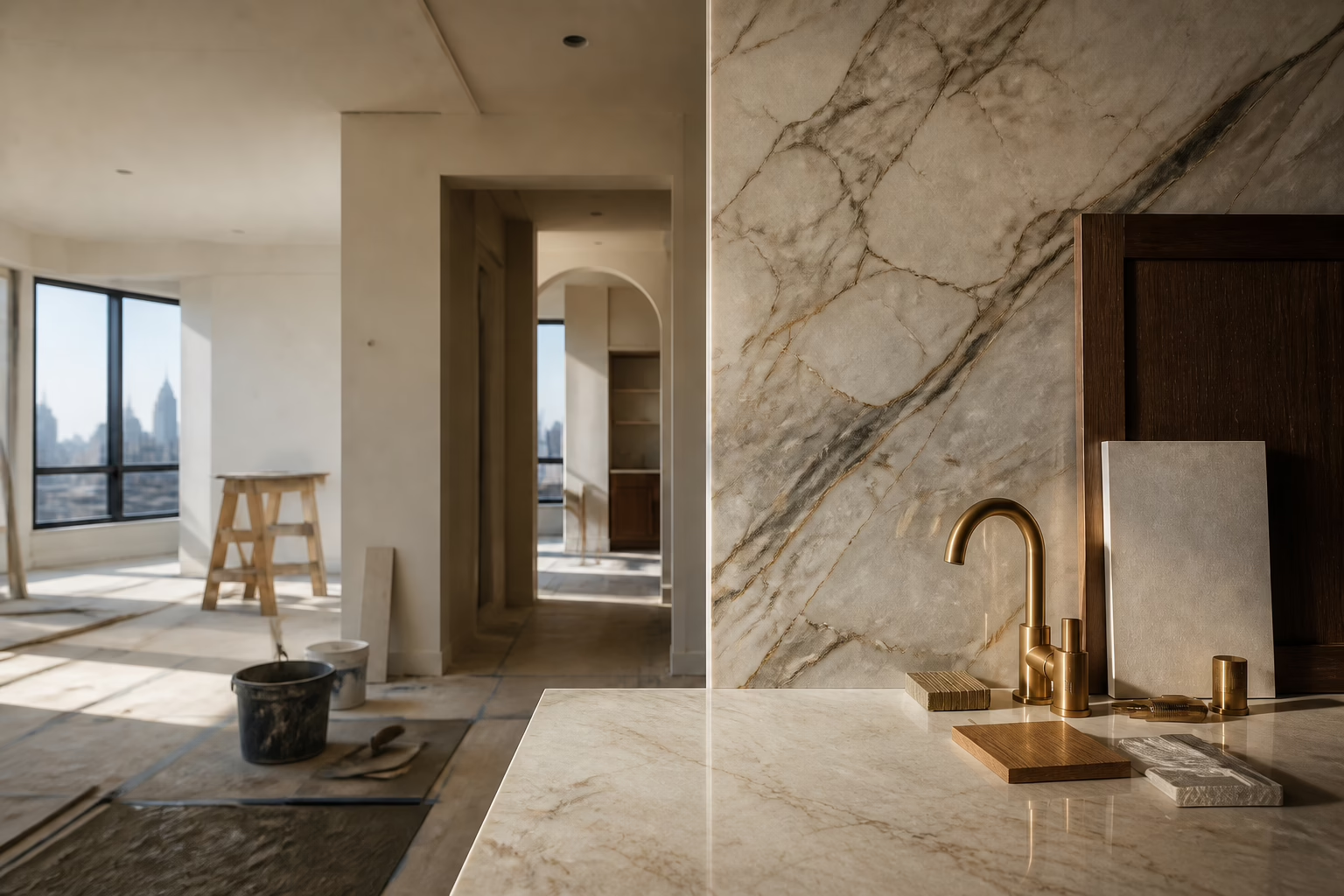
One of the most confusing parts of planning a renovation is understanding where the money actually goes. Homeowners often focus on visible finishes first: stone, tile, cabinetry, fixtures, appliances, flooring, and lighting. Those selections matter, but they are only one part of the total investment.
In a luxury renovation, the budget is shaped by two major categories: the labor required to build the project correctly and the finish materials selected for the final design. Both matter. Both can change the outcome. But they behave very differently.
DNB’s guide to home renovation cost in NYC explains why local labor rates, permits, building rules, logistics, and site conditions make New York renovation pricing different. This article goes deeper into the budget structure itself, so homeowners can understand what they are really comparing.
Quick Overview
Labor is the cost of skilled work, site protection, demolition, carpentry, plumbing, electrical, tile installation, waterproofing, project management, trade coordination, inspections, and construction execution. Finish materials are the visible products selected for the home, such as cabinetry, stone, tile, fixtures, appliances, hardware, lighting, flooring, and paint.
A strong renovation budget separates labor from finish materials so the homeowner can see what is fixed by scope, what is driven by selections, and where decisions can be adjusted without damaging the quality of the work.
Table of contents
- Quick Overview
- Why Renovation Budgets Are Misunderstood
- What Labor Really Includes
- What Finish Materials Include
- Why High-End Materials Can Increase Labor
- Allowances, Selections, and Change Orders
- How to Value Engineer Without Cheapening the Project
- Why Budget Planning Matters Before Design Is Final
- How DNB Renovations Structures Budget Clarity
- Final Thoughts
Why Renovation Budgets Are Misunderstood
Many homeowners compare renovation budgets as if every estimate includes the same scope. In reality, two proposals can look similar at the top line while being completely different underneath.
One may include site protection, demolition, rough plumbing, licensed electrical work, waterproofing, detailed project management, delivery coordination, cleanup, and installation labor. Another may leave out key items or include broad allowances that will change later.
The same is true for finish materials. A budget might include basic tile and stock cabinetry, while the design the homeowner actually wants depends on custom millwork, imported stone, premium lighting, and high-end plumbing fixtures.
The issue is not that one number is right and the other is wrong. The issue is whether the budget explains what is included.
For a full home renovation, clarity is essential because decisions in one room can affect multiple trades. Moving a wall can affect electrical, flooring, trim, paint, lighting, HVAC, and built-ins. Changing a kitchen island can affect plumbing, cabinetry, stone, flooring, and electrical routing.
What Labor Really Includes
Labor is not only the hours a worker spends on site. In a professional renovation, labor also includes the coordination required to execute the project correctly.
Labor may include:
– Site preparation and protection
– Demolition
– Debris handling
– Framing and carpentry
– Plumbing rough-ins and fixture installation
– Electrical work and lighting installation
– HVAC coordination where applicable
– Waterproofing
– Tile setting
– Flooring installation
– Drywall and plaster work
– Painting and finishing
– Millwork installation
– Appliance installation
– Stone coordination and support prep
– Project management
– Trade scheduling
– Building communication
– Final punch list work
In NYC, labor is also shaped by building rules. Limited work hours, freight elevator reservations, service entrance requirements, common area protection, parking limitations, insurance documentation, and inspections can all affect how work is performed.
That is why a low labor number can be risky if it does not reflect the actual demands of the property.
What Finish Materials Include
Finish materials are the products that define the visible look and feel of the renovated home.
They may include:
– Cabinetry
– Stone slabs and countertops
– Tile
– Flooring
– Plumbing fixtures
– Toilets, tubs, and sinks
– Shower systems
– Appliances
– Lighting fixtures
– Switches, dimmers, and controls
– Door hardware
– Cabinet hardware
– Mirrors and medicine cabinets
– Paint
– Wallcoverings
– Custom glass
– Decorative metalwork
– Specialty surfaces
In a kitchen renovation, finish materials may represent a large portion of the visible budget because cabinetry, appliances, stone, plumbing fixtures, and lighting all need to work together. DNB’s article on kitchen renovation cost and process explains how these decisions interact with building requirements and construction sequencing.
In a bathroom renovation, finish materials may include tile, slab, vanities, shower glass, fixtures, lighting, storage accessories, and ventilation-related components. But the quality of the bathroom still depends heavily on labor behind the walls: waterproofing, drainage, framing, rough plumbing, electrical work, and installation precision.
Why High-End Materials Can Increase Labor
Luxury materials do not only change the material budget. They can also increase labor.
Large-format tile may require more wall preparation and careful setting. Natural stone may require templating, sealing, reinforcement, and precise installation. A wall-mounted toilet may involve framing and plumbing coordination. A steam shower may require waterproofing, vapor management, electrical planning, and ventilation coordination. Integrated lighting inside millwork may require coordination between the cabinetmaker, electrician, and designer.
Custom work also changes the sequence. If the project includes built-ins, custom vanities, panel-ready appliances, specialty hardware, or stone details, the labor plan needs to reflect measurement, fabrication, delivery, installation, and adjustment.
This is why a luxury renovation cannot be priced accurately from inspiration photos alone. The details that make a space feel elevated often require more planning and more skilled installation.
DNB’s interior design services help connect the visual direction to the buildable plan, so finish selections are evaluated against scope, budget, and construction requirements before work begins.
Allowances, Selections, and Change Orders
An allowance is a placeholder amount for a material or scope item that has not been finalized. Allowances are useful when the homeowner has not selected every finish yet, but they can create confusion if they are too vague.
For example, a tile allowance might be realistic for a standard porcelain tile but too low for handmade tile, marble mosaic, bookmatched stone, or large-format slabs. A cabinet allowance may not reflect custom interiors, specialty finishes, integrated lighting, or panel-ready appliance details.
Change orders usually appear for two reasons:
1. The homeowner changes the scope or upgrades a selection.
2. Hidden site conditions are discovered during construction.
Some change orders are normal in renovation, especially in older buildings. The problem is avoidable change orders caused by unclear scope, incomplete selections, or unrealistic allowances.
A strong budget reduces confusion by showing what is included, what is excluded, what is assumed, and which decisions still need to be finalized.
How to Value Engineer Without Cheapening the Project
Value engineering does not mean making the renovation look cheaper. Done well, it means protecting the design intent while adjusting the scope or selections intelligently.
Examples may include:
– Keeping plumbing in the same general location while improving the layout
– Choosing a durable porcelain tile instead of a higher-maintenance natural stone
– Using custom millwork in the most visible areas and simpler storage elsewhere
– Simplifying slab details without changing the overall design direction
– Prioritizing lighting, storage, and daily function over purely decorative upgrades
– Selecting reliable fixtures with better availability
– Phasing non-essential upgrades
The best value engineering happens before construction begins. Once walls are open and materials are ordered, changes are harder to make without affecting timeline and cost.
This is one reason DNB’s design-build approach can be useful for homeowners who want design, pricing, construction feasibility, approvals, and schedule planning connected early.
Why Budget Planning Matters Before Design Is Final
Budget planning should not wait until every finish is selected. If the design is developed without cost feedback, homeowners may fall in love with a plan that is difficult to build within the intended investment.
Early budget planning helps answer practical questions:
– Is the scope realistic for the property?
– Are plumbing or electrical moves worth the cost?
– Which finishes matter most?
– Which custom details should be prioritized?
– What should be ordered early?
– How much contingency is appropriate?
– What building requirements may affect labor?
For NYC apartments, this also includes permit and board considerations. DNB’s guide to NYC renovation permits and DOB approvals explains how documentation, filings, and building approvals can affect the project before construction starts.
How DNB Renovations Structures Budget Clarity
DNB Renovations works with homeowners who want a renovation process built around clear scope, design coordination, construction planning, and communication.
The DNB renovation process includes consultation, site visit, project assessment, design and planning, detailed estimate, permits and approvals, project preparation, demolition, construction, and final walkthrough. That structure helps homeowners understand what is included before the work begins.
DNB also backs its workmanship with a 5-year limited labor warranty, which reinforces an important point: labor quality is not an invisible line item. It is one of the main things that protects the renovation long after the project is complete.
Homeowners can review DNB’s completed renovation projects to see how design, materials, and craftsmanship come together across kitchens, bathrooms, full renovations, and interior design work.
Final Thoughts
A luxury renovation budget is not just a number. It is a map of the project.
Labor shows what it takes to build the renovation properly. Finish materials show how the home will look, feel, and perform. The strongest budgets separate the two, explain assumptions clearly, and connect selections to real construction requirements.
If you are planning a renovation in NYC or another DNB service area, start by understanding the scope before choosing every finish. Contact DNB Renovations to discuss your project and build a budget around clarity, not guesswork.